Spec Battle: Edifier R1280T vs Noble Fokus Amadeus — Is It Worth Upgrading?
When consumers compare two very different audio products — an affordable powered bookshelf speaker and a premium true‑wireless earbud — the conversation quickly becomes less about raw numbers and more about real‑world priorities. The Edifier R1280T and the Noble Fokus Amadeus occupy distinct corners of the audio market: the R1280T is a budget‑friendly, analogue‑first set of active bookshelf speakers aimed at desktops and small rooms; the Fokus Amadeus is a flagship true‑wireless model focused on portability, wireless codecs, and a refined personal listening experience. This article breaks down specifications, practical performance, pros and cons, and the upgrade value for common buyer profiles.
At a glance: what each product is for
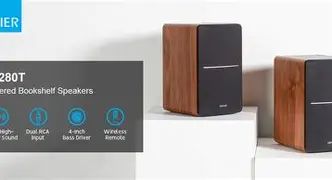
Edifier R1280T — An affordable, active 2.0 bookshelf speaker pair intended for desktop setups, compact living rooms, and casual hi‑fi listening without needing a separate amplifier. It emphasizes easy analog connectivity, tone controls, a warm wood cabinet aesthetic, and straightforward value.
Noble Fokus Amadeus — A high‑end true wireless earbud designed for listeners who want an audiophile‑leaning, on‑the‑go experience. It focuses on hybrid driver performance, advanced Bluetooth codecs (including aptX Adaptive where supported), long battery life, comfortable ergonomics, and app‑based tuning.
Detailed product analysis
Edifier R1280T — Design, connectivity, and real‑world use
The R1280T is a classic value proposition: MDF enclosures with a wood veneer, a front panel tweeter and woofer configuration, rear‑firing bass reflex port, and analogue inputs that make it compatible with almost any source that provides a line‑level output. On the desktop it pairs well with a laptop, turntable with a phono preamp, or a TV’s analog output. The active design removes the need for an external amp — users simply plug in and dial tone controls to taste.
Available controls include a volume knob plus separate bass and treble knobs on the active speaker, and some models ship with a basic remote for convenience. The R1280T's stereo imaging exceeds what its size would imply: for close‑to‑ear listening at a desk, it creates a satisfyingly coherent soundstage. Bass extension is limited by driver size and cabinet volume, so it relies on careful positioning (away from walls or with the port unobstructed) to maximize low‑end impact.
Practical advantages include reliable wired connectivity, no latency, and broad compatibility. For someone who values physical controls, the ability to plug two sources simultaneously via dual RCA inputs is a pragmatic feature: a media player and a work computer can stay connected without swapping cables.
Noble Fokus Amadeus — Design, connectivity, and real‑world use
The Fokus Amadeus targets a different set of concerns: portability, wireless convenience, and a sound signature that aims toward audiophile clarity despite the tiny form factor. Its hybrid driver approach (dynamic for bass, balanced armature(s) for mids and treble) is common in higher‑end earbuds because it helps keep low frequencies impactful while allowing detail and resolution in the midrange and upper registers.
Looking for the best Audio & Headphones deals on Amazon?
Shop Amazon →On the connectivity side, the Amadeus typically supports Bluetooth 5.x and high‑quality codecs such as aptX Adaptive and AAC, which matter for latency and fidelity on compatible devices (phones, tablets, DACs with BT transmitters). Real‑world strengths include comfortable fit for extended listening, longish battery life for a TWS product (several hours per charge plus case top‑ups), and smartphone app controls for EQ and firmware updates.
For commuters, frequent travelers, and those who make a lot of calls, the Noble’s in‑ear isolation and call processing (microphone arrays, ENC) can be decisive. For critical listening, the earbuds' soundstage will not match a well‑placed pair of bookshelf speakers in a properly treated room, but for private listening the detail retrieval and convenience can make the Amadeus the preferred daily driver.

Comparison table
| Specification / Feature | Edifier R1280T | Noble Fokus Amadeus |
|---|---|---|
| Product type | Active bookshelf speakers (2.0) | True Wireless Stereo (TWS) earbuds |
| Amplification | Built‑in amplifier (approx. 21W + 21W RMS) | Battery‑powered earbud amplifiers (internal) |
| Drivers | 4" woofer + 0.5" silk dome tweeter | Hybrid: dynamic driver + balanced armature(s) |
| Frequency response | ~52 Hz – 20 kHz | Manufacturer specified extended range; emphasis on clarity |
| Inputs / Connectivity | Dual RCA analog inputs; 3.5mm AUX via cable | Bluetooth 5.x; aptX Adaptive / AAC / SBC; app support |
| Controls | Volume, bass, treble knobs; basic remote | Touch controls; app EQ and firmware updates |
| Portability | Stationary — requires power and space | Highly portable; pocketable charging case |
| Battery life | Not applicable (powered by mains) | ~6–8 hours per charge; case adds additional charges |
| Use cases | Desks, small rooms, nearfield listening, casual home audio | Commuting, travel, workouts, private critical listening |
| Price positioning | Entry / value segment | Premium / high‑end TWS segment |
Pros & Cons
Edifier R1280T
- Pros:
- Excellent value for solid, room‑filling stereo sound in small spaces
- Simple plug‑and‑play with analog sources — no separate amp required
- Physical bass and treble controls for quick tonal adjustment
- Classic wood finish that integrates well with home decor
- Dual RCA inputs make switching between sources painless
- Cons:
- Limited low‑end extension compared with larger speakers or subwoofers
- No Bluetooth or digital inputs on this model (some variants add Bluetooth)
- Not portable — requires mains power and space
- Tone knobs are useful but not as precise as DSP/EQ control
Noble Fokus Amadeus
- Pros:
- Hybrid driver configuration yields authoritative bass and detailed highs
- High‑quality Bluetooth codecs reduce latency and improve fidelity on compatible devices
- Compact, comfortable, and highly portable with a charging case
- App support for tuning and firmware updates
- Good call performance and water resistance for everyday use
- Cons:
- Higher price point compared to mainstream TWS options
- Soundstage and spatiality cannot match proper nearfield speakers in a room
- Fit and seal vary by ear — performance depends on achieving a good seal
- Wireless audio still has limitations versus wired high‑res sources for critical listening
Real‑world use cases and buyer concerns
Every upgrade decision should start by answering: what problem is being solved? Typical buyer profiles and their concerns help frame whether moving from an Edifier‑class speaker to Noble‑class earbuds (or vice versa) makes sense.
Desktop worker who streams music and attends video calls
If most listening happens at a desk and the priority is comfortable conversation, low latency for voice, and a pleasant background music experience, the Edifier R1280T is a pragmatic choice. It offers fuller sound in a shared space and better natural room presence for multiple listeners. The R1280T also avoids Bluetooth pairing headaches during calls and has zero wireless latency.
Commuter or frequent traveler
The Fokus Amadeus clearly wins for portability, isolation, and convenience. A commuter values battery life, fit, noise rejection (for calls) and weight. The earbuds also provide a private listening environment and are less likely to disturb others — an important social factor that many buyers don’t realize until they switch to in‑ear listening.
Casual audiophile or small‑room listener
If the goal is to enjoy a lifelike soundstage and require more low‑end authority than earbuds can produce, the R1280T is still attractive for small rooms or nearfield listening. However, if the listener prioritizes detail retrieval and the ability to tweak sound with an app and codecs, the Amadeus becomes compelling. For audiophile use, the best result often involves a DAC + high‑quality wired headphones, but among mainstream mass‑market choices the Amadeus brings a taste of high‑resolution tuning in a wireless form factor.
Shop the latest Audio & Headphones picks on Amazon.
Browse Now →Home theater or gaming
Neither product is a complete, dedicated gaming or home theater solution. The R1280T can provide wider room sound and is better for local multiplayer or TV audio (with the right connections), while the Amadeus excels in personal gaming on mobile devices with low‑latency codecs and discrete headphone spatialization features when supported by software.
Is it worth upgrading?
The question "Is it worth upgrading?" depends entirely on the starting point and the listener’s priorities. Consider these typical scenarios:
- From basic earbuds or laptop speakers to R1280T: Yes — the R1280T delivers a significant increase in soundstage, bass weight, and listening comfort for the home. It is a high‑impact upgrade for modest cost.
- From good wired headphones to Amadeus: Possibly — the Amadeus offers portability, wireless convenience, and a refined tuning. However, audiophiles who already own high‑quality wired cans may not consider the change an upgrade in fidelity; it’s more of a lifestyle upgrade.
- From R1280T to Amadeus (or vice versa): Not a direct apples‑to‑apples upgrade. Moving from speakers to earbuds trades room presence for portability and privacy. The upgrade is worthwhile only if the buyer’s use case shifts (e.g., more commuting or private listening vs. stationary home listening).
Buying guide — how to choose between them
Use this checklist to decide which product aligns with the buyer’s needs.
1. Define the primary use case
- Home listening, shared room, or desktop → lean toward Edifier R1280T.
- Commuting, calls on the move, workouts, private listening → lean toward Noble Fokus Amadeus.
2. Check connectivity and device compatibility
- Need for dedicated analog inputs or a turntable → R1280T is the obvious choice.
- Require aptX Adaptive low latency for Android phones or wide codec support → Amadeus is better.
3. Prioritize sound characteristics
- Desire for more natural room presentation and bass weight without earbuds → R1280T.
- Want detailed midrange and controlled highs with customizable EQ in a pocketable form → Amadeus.
4. Consider portability and battery
- If the product must travel or be used outside the home, battery‑powered TWS is necessary — choose Amadeus.
- If mains power and a fixed listening position are acceptable, a powered speaker like the R1280T is sensible.
5. Budget and value
- R1280T generally represents excellent price‑to‑performance for home audio on a budget.
- Amadeus occupies a premium bracket where cost is justified by portability, driver design, and premium materials; budget accordingly.
6. Future expandability
- Want a simple, no‑fuss setup that works with a wide range of sources? R1280T’s analog inputs are future‑proof for many legacy devices.
- Want firmware updates, app features, and potential codec improvements? Amadeus’s app support offers longevity in the wireless domain.
Practical tips for buyers
- For small‑room speaker placement: place the R1280T slightly toe‑in toward the listening position, keep the active speaker at ear height, and allow space behind the port. Consider a small desktop subwoofer if bass is important.
- For earbuds fit: try multiple eartip sizes and memory foam tips to achieve the best seal — small changes in seal dramatically affect bass and isolation.
- Consider the intended sources: if most sources are digital and require Bluetooth, decide whether a speaker with Bluetooth or a Bluetooth transmitter for the R1280T is a better path.
- Test calls and mic performance before committing if call quality is a priority; real‑world call performance varies with environment and firmware.
Conclusion
The Edifier R1280T and the Noble Fokus Amadeus address different problems and excel in their respective domains. The R1280T is a pragmatic, value‑oriented bookshelf speaker that delivers satisfying nearfield and small‑room sound — ideal for a stationary setup where a warm, room‑filling presence matters. The Noble Fokus Amadeus is a premium true‑wireless earbud that prioritizes portability, codec flexibility, and a refined personal listening experience with hybrid drivers and app tuning.
Upgrading is worthwhile only insofar as it aligns with changed priorities. If a buyer needs better home audio for shared listening, the R1280T is an upgrade from laptop speakers or cheap Bluetooth speakers. If daily life requires freedom from cables, improved call quality, and detailed personal listening, the Amadeus is a valuable move. For those deciding between the two, the better question is not which is universally "better" but which better solves the listener’s current use‑case and listening environment.