Difference Between Echo Show 8 4Th Gen and SwitchBot K11 Robot Vacuum Explained
Introduction
Consumers today frequently weigh smart-home convenience against task-specific automation. Two very different devices often considered in the same buying conversation are the Echo Show 8 4th Gen and the SwitchBot K11 Robot Vacuum. One is a smart display with voice-first functionality and visual controls; the other is an autonomous cleaning robot designed to reduce the day-to-day chore of vacuuming and mopping. This article explains how these products differ, what each is best suited for, and the real-world factors buyers typically care about when choosing between or alongside them.
At a glance: what each product is for
Echo Show 8 4th Gen is a smart display designed to be a household hub for voice assistants, video calls, media consumption, and simple visual controls for smart home devices. It emphasizes interaction, convenience, and hands-free information.
SwitchBot K11 Robot Vacuum is an automated floor-care appliance intended to keep hard floors and carpets cleaned with minimal human intervention. It focuses on navigation, suction/mopping performance, and maintenance efficiency.
Detailed product analysis
Echo Show 8 4th Gen — analysis and real-world use
The Echo Show 8 4th Gen combines a mid-sized touchscreen with a voice assistant interface. In everyday settings, it serves as a kitchen companion for timers, recipes, and news briefings; a bedside device for alarms and smart-home control; and a living-room visual aid for video calling and streaming short-form video. Buyers often choose the Echo Show 8 for its balance between screen size and countertop footprint — large enough to view video calls and media, small enough to fit on limited surfaces.
Key use cases include:
- Hands-free cooking: start timers, follow recipe steps, or watch a short cooking video while hands are occupied.
- Home monitoring and communication: make quick video calls, announce messages to other devices, or glance at weather and traffic updates.
- Smart home control: visually manage lights, thermostats, and scenes from one surface rather than switching between smartphone apps.
Buyers care about privacy, audio quality, and ecosystem compatibility. In real homes, the Echo Show 8 is judged on how well its microphones pick up voice from across a noisy kitchen, the clarity of its speakers for music and calls, and whether it integrates smoothly with other smart devices already owned.
SwitchBot K11 Robot Vacuum — analysis and real-world use
The SwitchBot K11 Robot Vacuum is designed to automate cleaning routines. It aims to reduce the time householders spend vacuuming by autonomously navigating and cleaning floors. In practical use, the K11’s value is measured by coverage reliability, suction effectiveness across surface types, mopping performance (if equipped), and how much human maintenance the robot requires.
Shop the latest Electronics picks on Amazon.
See Deals →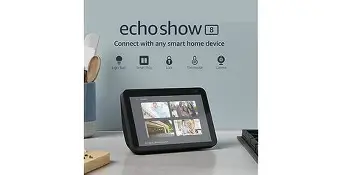
Key use cases include:
- Daily upkeep: quick pickup of dust, pet hair, and debris from common pathways and living areas.
- Scheduled cleaning: run the robot on a daily schedule so floors remain presentable between deep-clean sessions.
- Spot cleaning and edge attention: target high-traffic zones during social gatherings or after meals.
Shoppers evaluate the K11 on navigation intelligence (does it avoid obstacles and map areas correctly?), battery life sufficient for their home size, noise level during operation, and the convenience of dumping the dustbin or using a self-empty dock if available.
Pros & cons
Echo Show 8 4th Gen
- Pros:
- Compact, usable touchscreen for visual feedback and controls
- Hands-free voice access to information, music, and timers
- Useful for video calls and quick media playback
- Centralizes smart-home controls for many compatible devices
- Generally simple setup and frequent software updates
- Cons:
- Not a replacement for a dedicated home hub when advanced local controls are required
- Privacy concerns around microphones and cameras for some buyers
- Requires constant power (not portable)
- Media capabilities are limited by supported streaming services and regional restrictions
SwitchBot K11 Robot Vacuum
- Pros:
- Automates recurring cleaning with scheduling and app control
- Reduces routine effort for busy households, especially with pets or children
- Often includes multiple cleaning modes for carpets and hard floors
- Navigation and mapping features minimize missed spots and collisions
- Can work in the background while occupants go about their day
- Cons:
- Periodic maintenance required (emptying bin, cleaning brushes, replacing filters)
- Performance varies by floor type and room layout (tightly packed rooms are harder)
- Loudness during operation may be disruptive in quiet homes
- May struggle with high-pile carpets or large debris without manual pre-cleaning
Side-by-side comparison
| Feature | Echo Show 8 4th Gen | SwitchBot K11 Robot Vacuum |
|---|---|---|
| Primary function | Voice-first smart display for information, media, and smart-home control | Autonomous floor cleaning (vacuuming and in some cases mopping) |
| User interaction | Touchscreen + voice commands + companion app | App control, scheduling, voice integration for start/stop (via assistants) |
| Integration | Works well within a smart assistant ecosystem; acts as a visual control point | Integrates into smart-home routines and voice assistants for hands-free control |
| Mobility | Stationary; requires outlet | Mobile; designed to traverse floors and return to dock to recharge |
| Maintenance | Minimal (software updates, occasional dusting) | Regular (empty bin, clean brushrolls, replace filters, water tank if mopping) |
| Noise | Low when idle; moderate when media plays | Moderate to high during operation depending on mode |
| Best for | Users who want voice-enabled convenience, visual feedback, and smart-home control | Users who want to minimize time spent on floor care and maintain tidy floors daily |
| Privacy considerations | Microphone and camera hardware require user attention and configuration | Mapping and app data may raise privacy questions for some users |
How these devices complement (or replace) each other
Rather than being direct alternatives, the Echo Show 8 and the SwitchBot K11 fulfill different needs. In many households they are complementary: the Echo Show 8 can be the voice-driven control center that launches a cleaning cycle on the K11, announces when a job is done, or displays status feeds from compatible devices. Buyers should consider whether they want a device that simplifies daily routines (robot vacuum) or one that provides constant information and control at eye level (smart display). For households prioritizing both convenience and cleanliness, pairing the two makes practical sense.
Buying guide: what to consider before choosing
Purchasing decisions often come down to a combination of lifestyle, home layout, and priorities. The sections below outline the most important considerations for each product type and for deciding whether to invest in one or both.

1. Clarify the primary need
If the main goal is to reduce time spent on chores and maintain cleaner floors with minimal intervention, a robot vacuum is the direct solution. If the priority is easier access to information, hands-free controls, and enhanced smart-home interaction, a smart display is the appropriate choice.
2. Consider the home environment
- Home size: Robot vacuums’ battery life and mapping capabilities determine how well they cover larger homes. Precision mapping (and return-to-dock behavior) improves performance in multi-room setups. The Echo Show 8’s suitability is unaffected by home size but depends on where the homeowner wants visual control.
- Floor types: High-pile carpets and uneven thresholds can limit robot vacuum effectiveness. Hard floors and low-pile carpets are where robot vacuums generally perform best.
- Room layout: Cluttered rooms with many low obstacles reduce robot efficiency. A smart display requires only a convenient surface near power and Wi-Fi.
3. Ecosystem and compatibility
Buyers already invested in a particular voice ecosystem should prioritize devices that integrate seamlessly. A smart display that uses the same voice assistant as other devices will simplify routines. Robot vacuums that support popular voice assistants and open APIs give more flexibility for automation.
4. Privacy and data considerations
Smart displays include microphones and often cameras. Buyers should examine privacy controls — physical camera covers, microphone/camera mute switches, and granular data settings in the companion app. For robot vacuums that map interiors, examine how map data is stored and whether it is shared or retained locally within the user’s account.
Discover deals on Electronics — updated daily.
Shop Amazon →5. Maintenance and total cost of ownership
Robotic cleaners require consumables: filters, brush replacements, and in some cases mop pads and cleaning solution. Factor these recurring costs into long-term ownership. Smart displays rarely need consumables but may receive software updates and occasional accessories (stands, mounts).
6. Noise and daily life
Robot vacuums can run on schedules but may be intrusive if a household values quiet during working hours. Smart displays are generally quiet unless playing media or making announcements. Consider when the device will be active and whether scheduled operation fits household routines.
7. Support, warranty and service
Check the manufacturer’s warranty, availability of customer service, and ease of obtaining replacement parts. For robot vacuums, reliable service channels and the option for a self-emptying dock or authorized repairs can influence long-term satisfaction. For smart displays, software support and ongoing updates are important for longevity.
8. Feature trade-offs and extras
- Advanced mapping and multi-floor support (robot vacuum): Important for multi-story homes.
- Camera quality and privacy shutters (smart display): Relevant to video calling and monitoring.
- Self-emptying docks (robot vacuum): Reduce frequent bin emptying but add to upfront cost and maintenance considerations.
- Screen size and speaker quality (smart display): Impact media consumption and visibility across the room.
Who should buy which device?
To make a practical recommendation, consider typical buyer profiles:
- Busy professionals and families with limited time: A robot vacuum is likely to deliver immediate, tangible value by cutting down chore time. If they also want centralized control and quick access to information, adding a smart display makes sense.
- Cooking enthusiasts and home entertainers: A smart display excels in kitchens for recipes, timers, and controlling smart lights or media during gatherings.
- Small-apartment dwellers: One device may suffice depending on priorities: a compact smart display for convenience, or a robot vacuum to maintain small living spaces without manual effort.
- Privacy-sensitive users: Evaluate the smart display’s privacy controls carefully; if mapping data from a robot vacuum is a concern, confirm storage and sharing policies before purchase.
Conclusion
The Echo Show 8 4th Gen and the SwitchBot K11 Robot Vacuum address different dimensions of modern home convenience. The Echo Show 8 is a visual and voice-centric control point that simplifies interaction with information and smart-home devices, while the SwitchBot K11 automates a specific physical chore: keeping floors clean. Buyers should prioritize based on their immediate needs — hands-free information and control versus time-savings on cleaning — and consider how each device will fit into the household ecosystem, maintenance cadence, and privacy preferences. For many households, these products are complementary rather than competitive: the Echo Show 8 can orchestrate and display, while the K11 executes a repetitive task, together creating a more seamless, automated home experience.